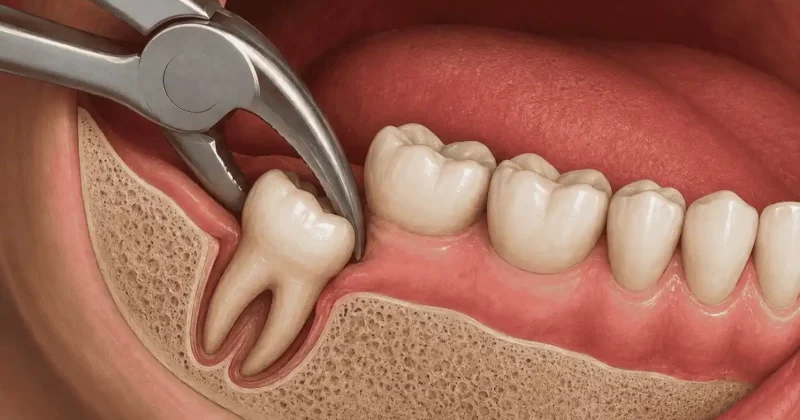
Wisdom teeth, also known as third molars, are the last permanent teeth to emerge, usually between the ages of 17 and 25. While some wisdom teeth erupt normally, many become impacted due to insufficient space in the jaw. Impacted wisdom teeth can lead to pain, infection, swelling, gum disease, tooth decay, and damage to neighbouring teeth, making timely removal essential.
At Baniyas Medical Centre, we provide comprehensive wisdom tooth removal in Baniyas using advanced diagnostic imaging, modern surgical techniques, and personalised aftercare to ensure a safe and comfortable experience
Wisdom teeth, medically called ‘third molars’, are the four rearmost teeth in the mouth, one in each corner of the jaw. They are the last adult teeth to erupt, typically appearing between the ages of 17 and 25, though they can emerge later in some adults.
Thousands of years ago, our ancestors’ larger jaws could comfortably accommodate all 32 teeth. Today, the human jaw has evolved to be narrower, which means most people simply do not have enough space at the back of the mouth for wisdom teeth to erupt correctly. When a wisdom tooth cannot emerge fully or in the right direction, it is called an impacted wisdom tooth the most common reason for extraction.
Not every wisdom tooth needs to be removed. When they erupt cleanly, align properly, and can be kept clean, they can stay. But when they cause pain, infection, crowding, or are visibly impacted on X-ray, extraction is the clinically recommended solution.Some people never develop wisdom teeth at all, while others develop all four. Genetics plays a significant role in both whether wisdom teeth appear and how they grow. When there is insufficient room for these teeth to erupt properly, they can become:
Impacted wisdom teeth are among the most common reasons patients require oral surgery.
Many wisdom tooth problems develop gradually. Do not wait for severe pain the earlier we catch the issue, the simpler the extraction and recovery.
● Persistent Jaw or Tooth Pain
A dull, throbbing ache at the back of the jaw that doesn’t go away with pain relief is the most common signal that a wisdom tooth is causing damage or infection
● Swollen, Red or Bleeding Gums
Inflammation around a partially erupted wisdom tooth, a condition called ‘pericoronitis’, causes the overlying gum flap to become swollen, painful, and prone to bleeding.
● Bad Breath or Unpleasant Taste
Bacteria thriving under a partially erupted gum flap or in a decayed wisdom tooth cavity produces an unmistakable odour and bitter taste that oral hygiene alone cannot fix.
● Difficulty Chewing or Swallowing
When the surrounding tissues are infected or inflamed, even opening the mouth becomes painful (trismus), making eating and swallowing uncomfortable or impossible.
● Crowding of Other Teeth
A wisdom tooth pushing against the second molar causes a domino effect of pressure through the arch, undoing orthodontic treatment and creating visible crowding at the front.
● Repeated Infections or Cysts
An impacted tooth that cannot be kept clean eventually develops decay, cysts within the jaw bone, or recurring gum infections that will not resolve without extraction.
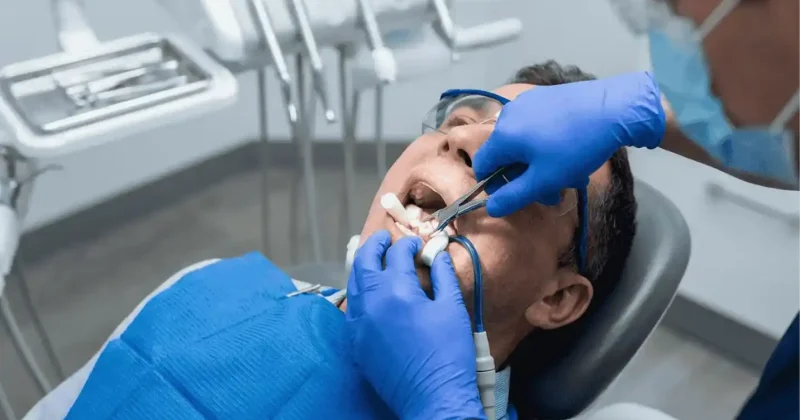
Not all wisdom tooth removals are equal. The approach depends on whether the tooth is erupted, partially erupted, or fully impacted within the bone.
1. Simple Wisdom Tooth Extraction
Performed when the wisdom tooth has fully erupted through the gum line, is visible in the mouth, and can be accessed directly with standard instruments. This is the most straightforward type of wisdom tooth removal.
2. Surgical Wisdom Tooth Extraction
Required when the wisdom tooth is impacted in soft tissue or partially embedded in bone, meaning it cannot be accessed and removed with standard forceps alone. This is the most common type in our practice.
3. Sectioned (Divided) Wisdom Tooth Extraction
Used for deeply impacted or horizontally orientated wisdom teeth where removing the tooth as a single unit would risk damaging adjacent teeth, nerves, or the sinus floor. The tooth is precisely divided into sections before removal.
At Baniyas Medical Clinics, wisdom tooth extractions are performed by experienced dental professionals who carefully evaluate each case and recommend the most suitable treatment approach. Using advanced imaging and precise techniques, we ensure safe, comfortable, and effective care while supporting a smooth recovery.
From the moment you walkmin to the moment you go home, here is exactly what to expect during your wisdom tooth removal appointment.
● Consultation & Digital X-Ray
Your dentist reviews your symptoms and takes a panoramic or periapical X-ray to determine the exact position, angulation, and root morphology of the tooth. This defines the extraction approach before treatment begins.
● Treatment Plan & Consent
We explain the type of extraction required, the anaesthesia plan, expected duration, the recovery, and costs. You receive a written treatment plan and have time to ask questions before signing consent.
● Local Anaesthesia Administration
A topical anaesthetic gel is applied first to reduce needle sensitivity. Local anaesthetic is then injected into the gum and surrounding tissue. We wait until the area is fully numb typically 3–5 minutes before proceeding.
● Tooth Extraction
The tooth is removed using the appropriate technique (simple, surgical, or sectioned). You will feel pressure and movement but no sharp pain. If at any moment you feel discomfort, raise your hand and we will administer more anaesthetic.
● Socket Cleaning & Closure
The socket is thoroughly irrigated with sterile saline to remove debris and bacteria. Dissolvable sutures are placed if needed. A sterile gauze pad is positioned for you to bite on to initiate clot formation and stop bleeding.
●Post-Operative Instructions & Prescriptions
Before you leave, our team provides written aftercare instructions, prescribes appropriate pain relief and antibiotics if indicated, and books your follow-up review. We also give you our contact number for any concerns during recovery.
Most patients recover comfortably with proper post-operative care.
During Recovery:
Avoid These After Extraction
Following aftercare instructions helps reduce the risk of complications such as dry socket and infection.
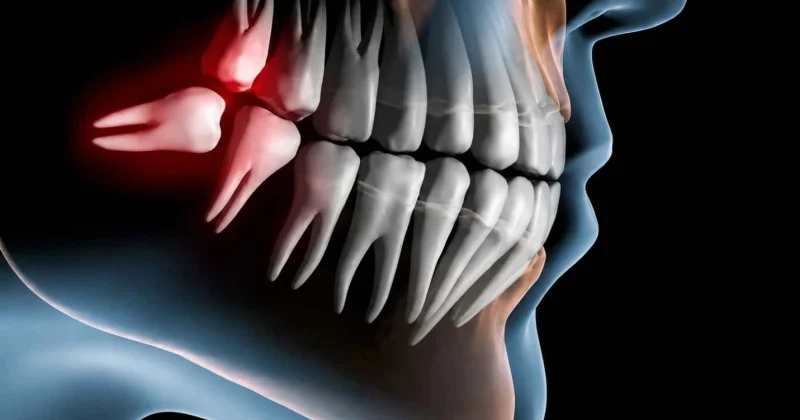
Many patients ask whether they should wait or act immediately. The answer is usually: do not delay if there are symptoms but preventive removal is also worth discussing.
● Late Teens & Early 20s
Ideal time for preventive extraction if impaction is confirmed on X-ray. Roots are not yet fully formed, bone is less dense, and recovery is fastest. Many orthodontists recommend removal before brace treatment.
● Mid to Late 20s
Still an excellent time to act, especially when symptoms begin. Roots may be more complete, making extraction slightly more technical, but outcomes remain excellent and recovery is typically uncomplicated.
● 30s and Beyond
Extraction at any age is safe and effective when indicated. Bone density increases with age, which can extend recovery slightly, but unresolved wisdom tooth problems only worsen over time and should not be left untreated.
Explore our other dental treatments:
If you are experiencing wisdom tooth pain, swelling, infection, or discomfort, our experienced dental team can assess your condition and recommend the most appropriate treatment.
Schedule a consultation today for professional wisdom tooth removal in Baniyas and protect your long-term oral health. Contact us today to book your appointment and receive expert dental care in a comfortable and patient-focused environment. Same day assessments available. Our experienced dental team in Baniyas East is ready to help you.
Healthy Gums,Stronger Smile
Expert dental care for a lasting smile
Healthy gums are the foundation of a healthy smile. Our periodental therapy helps treat gum infections, bleeding gums, and bad breath with advanced care and expert treatment.
Persistent jaw pain, clicking sounds when opening your mouth, headaches, facial discomfort, or difficulty chewing may indicate a temporomandibular joint (TMJ) disorder.
Wisdom teeth, also known as third molars, are the last permanent teeth to emerge, usually between the ages of 17 and 25.While some wisdom teeth erupt normally.
Restore damaged or weak teeth with durable and natural-looking dental crowns that improve both function and appearance.
Straighten your teeth and improve your smile with modern orthodontic treatments. We offer solutions for better alignment and oral health.
A beautiful smile can significantly improve your confidence and overall appearance. If you are concerned about stained
Years of
care
Happy customer
Patient
rating

Our clinic is open every day from 9am to 10pm. Call us, send us a WhatsApp message, or fill in the online form and our team will confirm your appointment within 2 hours
No. The procedure is performed under local anaesthesia, ensuring you remain comfortable throughout treatment. Mild soreness after surgery is normal and manageable with prescribed medication.
Most procedures take between 20 and 60 minutes, depending on the position and complexity of the tooth.
Most procedures take between 20 and 60 minutes, depending on the position and complexity of the tooth.
Removal is generally recommended when a wisdom tooth causes pain, infection, decay, gum disease, damage to nearby teeth or becomes impacted.
Most patients return to normal activities within a few days, while complete healing of the extraction site may take several weeks.
Yes. Impacted wisdom teeth can contribute to infection, gum disease, tooth decay, cyst formation, and damage to neighbouring teeth if left untreated.
The cost of wisdom tooth removal depends on several factors, including whether the tooth is fully erupted or impacted, the complexity of the extraction, the need for surgical intervention, and the diagnostic imaging required. After a thorough examination and dental X-rays, our dentist will provide a personalised treatment plan and a clear cost estimate before treatment begins.
WhatsApp us